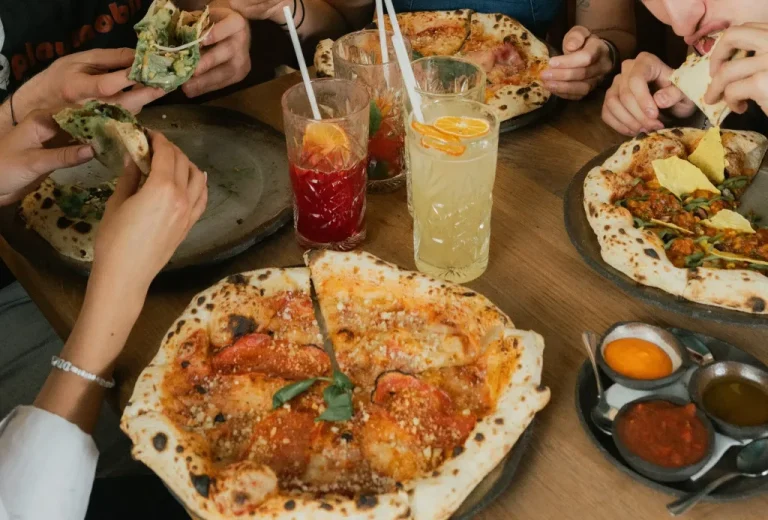
We might all differ, but everyone has a deeply ingrained concept of pizza: the family-sized Quattro Stagioni ordered for a party, the classic war-starter that is Hawaiian pizza, the life-saving pepperoni slice at night, or the rectangular one thanks to mum’s baking sheet. However, everyone also has an idea of what the original neapolitan pizza is like: thin, light, and very Italian. In recent years, this style has been popping up in more and more places in Budapest, so we think it’s about time to discuss what you should know about it, why it’s worth trying, and how to stand out in this field.
In this article, we’ve gathered…
…how pizza napoletana became Italy’s most important product.
…what rules apply to its preparation today.
…how to make it even better.
…and where to try it all in Budapest.
Pizza Napoletana Belongs to Everyone: From Peasant Food to a Royal Gift
The story of Neapolitan pizza is a triumph of simplicity: what was a quick street food for the poor in 18th-century Naples has now become an unavoidable cornerstone of the world’s gastronomic heritage. Previously, it was popular merely as a simple and cheap solution for using up leftover ingredients. Legend has it that the breakthrough happened in 1889, when King Umberto I of Italy and his wife, Margaret of Savoy (Margherita di Savoia), visited Naples. In their honor, Raffaele Esposito, the city’s most renowned pizzaiuolo, created a dish flourishing in the colors of the Italian flag—red tomato, white mozzarella, green basil—and named it the Margherita after the queen.

Although Neapolitan pizza embarked on a world-conquering journey in the 20th century following this event, global popularity often came at the expense of quality, and the original recipe began to get lost in a sea of thick crusts and foreign toppings. The historical turning point arrived in 1984, when the Neapolitans got fed up with the distortion of their tradition and founded the Italian organization called AVPN (Associazione Vera Pizza Napoletana, or The True Neapolitan Pizza Association).
This association was the first to write down the strict system of rules: they recorded what ingredients, tools, and methods could be used, and what end result could be called original neapolitan pizza. This step elevated pizza from the ranks of simple fast food and brought the highest recognition to the masters of pizza napoletana, the pizzaiuolos: in 2017, UNESCO declared L’Arte del pizzaiuolo napoletano (the art of Neapolitan pizza makers) a cultural world heritage.
The Rules Defining Original Neapolitan Pizza
As we wrote above, the true Neapolitan pizza is not just food, but the subject of a strict code of laws written in 1984. According to the AVPN original regulations:
- The dough is of puritan purity: it must contain nothing but type 00 flour, water, salt, and yeast.
- The shaping must also be mathematically precise: the diameter of the disc is a maximum of 35 cm.
- The center: the pizza is soft, at most 0.3 cm high.
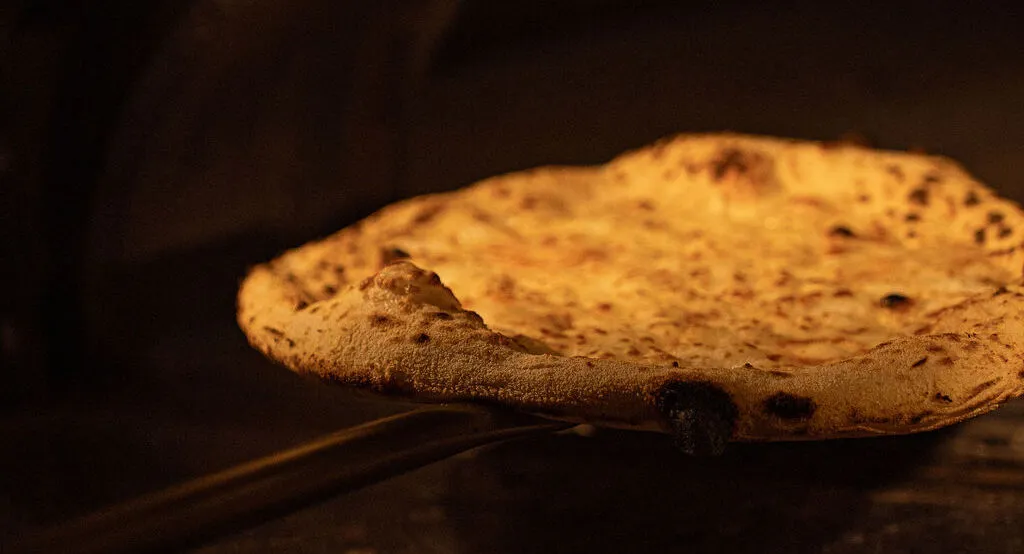
- The crust: the cornicione is airy and rises to a height of 1-2 cm.
- The baking is a lightning-fast heat shock: in a domed oven, at 430–485°C, the dough must bake to perfection in just 60–90 seconds.
The toppings are not such strict criteria, but for original neapolitan pizza, sourcing tomatoes and mozzarella from the Campania region is typical. Of the former, San Marzano tomatoes grown around Mount Vesuvius are considered essential, while for the latter, mozzarella di bufala (made from local buffalo milk) and fior di latte (made from cow’s milk) indicate that the pizza makers take their craft seriously.
Rising Above Tradition
Even the strictest traditions must keep up with the times. Although the original “scripture” prescribed only wood-fired ovens and brewer’s yeast, regulations and professional opinion have now refined. Due to sustainability and the limitations of urban environments, there are now special electric ovens certified by AVPN that are capable of reproducing the required temperature. The perception of sourdough has changed similarly: although the basic recipe uses yeast, modern haute cuisine is increasingly turning towards sourdough, which is no longer considered sacrilege but a quality step up that improves the dough’s flavor profile and digestibility.
Thus, these changes do not yet deprive a pizzeria of the possibility of using the designation “original neapolitan pizza”. However, there is a downtown place in Budapest that decided to go beyond even these limits and let go of the AVPN certification in exchange for its own vision. Neverland, maintaining the preparation process and the art of the pizzaiuolos, makes Neapolitan-style, but truly original pizza.
In this spirit, their most important innovation is that instead of industrial yeast, they work with sourdough from Altamura, Italy, and ferment the dough for 48 hours instead of the 24 hours prescribed by AVPN. This game of patience has a tangible benefit for the guest: the sourdough breaks down gluten and slows down starch absorption, so the pizza is much easier to digest, and its flavor profile becomes deeper and more complex.
However, the sourdough technology also required another technical twist: instead of the standard 60-65% hydration, Neverland’s dough is made with around 80% water content. Since sourdough absorbs more liquid, this exceptionally high hydration guarantees that the result isn’t dry, but remains perfectly juicy, soft, and airy. Finally, they also overwrote the “geographical rules”: they don’t stick exclusively to ingredients from Campania but select based on the personal research of the owner, Josep Zara. If the best olive oil can be obtained from Spain and organic flour from Hungary, they boldly deviate from Neapolitan dogmas for the sake of quality.
Neapolitan Style, Neverland Vibe
In Neverland, the experience doesn’t end with the last bite of pizza: this place is one of the meeting points with the most unique atmosphere in Budapest. Known until now primarily for the excitement of escape rooms, the opening of the restaurant created a continuously friendly and direct, yet more sophisticated atmosphere, where intimate dates and cheerful family lunches for 4-6 people find a perfect home. The taste experience is completed by the legendary cocktail selection: a drink menu composed specifically for the pizzas awaits, featuring light and balanced drinks that don’t overpower but harmoniously complement the Neapolitan flavors.
If you also want to try how respect for tradition and modern coolness fit together in Dohány Street, don’t leave getting in to chance: book a table at Neverland Pizzeria using the button below!